Harnessing subsurface solutions for sustainable development.
In the evolving landscape of land development, the integration of underground stormwater management facilities has emerged as a strategic solution to meet environmental regulations, optimize land use, and enhance project resilience. As urban density increases and available land becomes more constrained, developers are turning to below-grade systems to manage runoff efficiently while preserving surface space for more valuable uses.
Underground stormwater management facilities are engineered systems designed to capture, store, and release stormwater runoff in a controlled manner. These systems typically consist of large underground chambers, vaults, or pipes that temporarily detain water during storm events. Unlike traditional surface-based solutions such as wet ponds or swales, underground systems are particularly advantageous in high-density developments, steep terrains, or areas with limited open space.
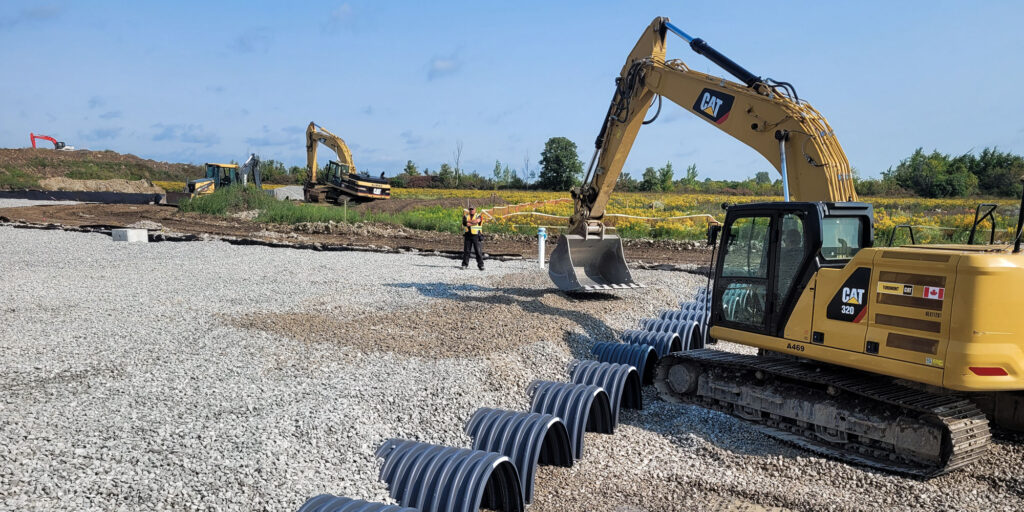
In our Land Development projects, such as 12668 Dixie Road and Nelles Estates, underground facilities have been used to manage both quantity and quality of stormwater. For instance, rooftop storage and infiltration chambers were employed to meet water balance targets, while open-bottom underground chambers facilitated infiltration and controlled discharge to receiving watercourses. These designs not only comply with municipal and conservation authority requirements but also support LEED certification goals and long-term sustainability.
From a technical standpoint, underground detention systems allow for precise control of flow rates, helping restore pre-development hydrological conditions. They also reduce the risk of surface flooding, erosion, and pollutant transport. In urban settings, they offer a safer alternative to open ponds, minimizing public safety concerns and avoiding land capture costs associated with surface Best Management Practices (BMPs).
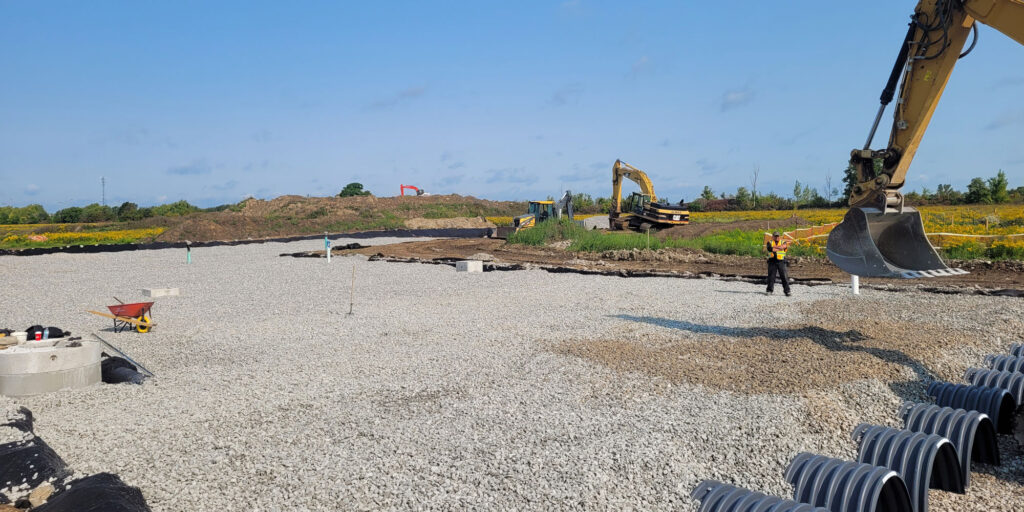
Moreover, these systems can be integrated with Low Impact Development (LID) features such as infiltration trenches and isolator rows, further enhancing water quality treatment and groundwater recharge. This approach was evident in the Nelles Estates project, where Jellyfish Filter units and LID strategies were proposed to optimize cost and performance.
In summary, underground stormwater management facilities are not just a technical necessity—they are a strategic asset in land development. They enable compliance, conserve valuable surface area, and contribute to the environmental and economic viability of subdivision projects. As your portfolio continues to expand across Ontario, these systems will remain central to delivering resilient, efficient, and sustainable communities.